MultiFlow: coupled flow matching for predicting single-cell multiomic perturbation responses in unseen cellular contexts
Abstract
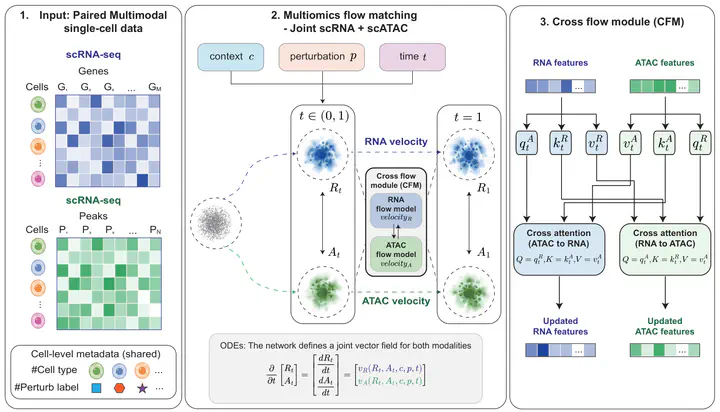
Predicting cellular responses to perturbation requires resolving coordinated changes across molecular layers, yet most single-cell perturbation models focus on transcriptional responses alone. Here we present MultiFlow, a coupled flow-matching framework that unifies generation and perturbation prediction of paired gene expression and chromatin accessibility. By learning coupled RNA-ATAC flows conditioned on perturbation and control-derived cellular-state representation, MultiFlow enables prediction of coordinated multiomic responses in unseen cellular contexts. Across multiomic generation benchmarks, MultiFlow accurately reproduced paired RNA-ATAC states and their population distributions. In multiomic perturbation benchmarks, MultiFlow achieved the strongest overall performance in predicting both gene-expression and chromatin-accessibility responses, outperforming competing modality-specific perturbation-prediction methods. Joint multiomic modeling further preserved perturbation-induced RNA-ATAC coordination, including concordant peak-gene effects and cross-modal cellular neighborhood structure. These results establish coupled flow matching as a unified generative framework for modeling paired multiomic states and predicting coordinated perturbation responses across cellular contexts. Code and tutorial for MultiFlow are available at https://github.com/liuq-lab/MultiFlow.
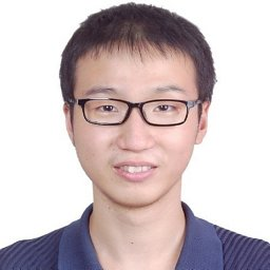
Haochen Wang
Postdoctoral Associate
Haochen earned his Bachelor of Electronic Engineering degree at Xidian University, where he focused on signal processing and computational techniques. He then pursued his Ph.D. in Control Science and Engineering at Tsinghua University under the guidance of Dr. Xiaowo Wang. His doctoral research concentrated on developing deep generative models for designing genetic elements, with a focus on synthetic biology applications. He also has previous research experience in DNA sequence generation with artificial intelligence during his time at the Shenzhen Institute of Advanced Technology, and computational analysis of single-cell perturbation data at Cartabio Technology. Haochen joined Yale University as a Postdoctoral Associate, and he is currently working on generative models on computational biology.
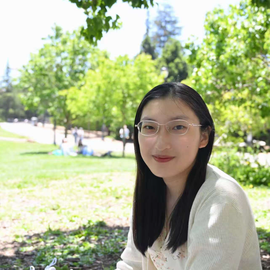
Charming Zhang
BIS Master student
This is Charming, a master’s student in Biostatistics at Yale School of Public Health. She’s interested in AI-driven statistical modeling and biomedical data science, especially Bayesian and generative modeling approaches for inference problems. Outside of research, she’s also really into history and soccer.

Xiaoming Nie
BIS Master student
Xiaoming Nie is an M.S. student in Biostatistics (Data Science Pathway) at Yale University. Her research interests center on causal inference applied to genomic data and single-cell genomics. She is also interested in Bayesian methods and their applications in genomic studies.
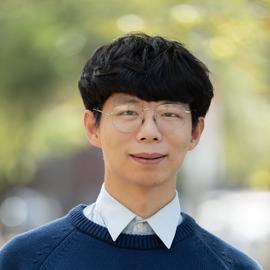
Qiao Liu
Assistant Professor of Biostatistics
My research interests include generative AI, high-dimensional data analysis, and computational biology.